Can Uterine Fibroid Symptoms Be Mistaken for Other Conditions?
Wiki Article
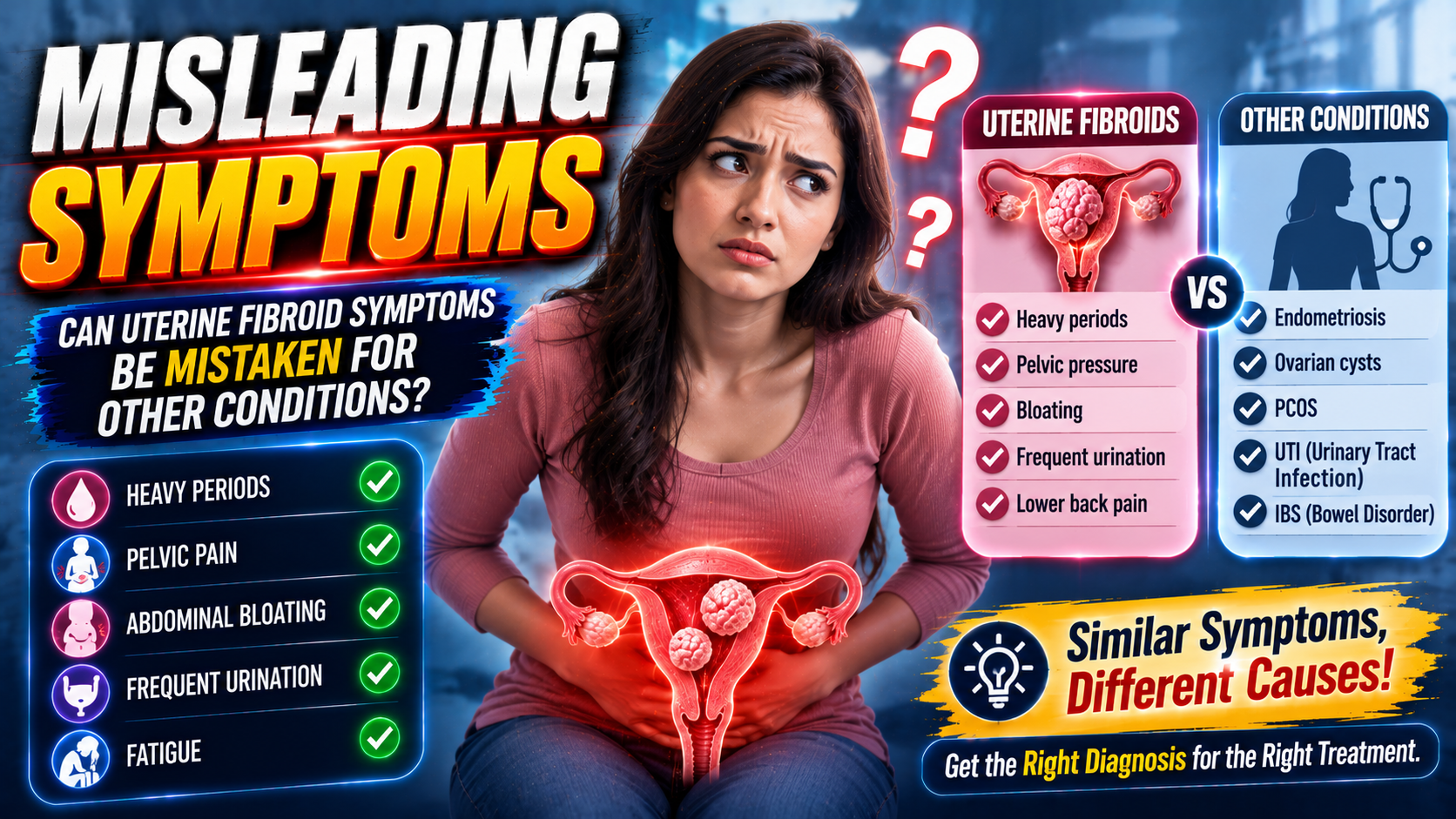
Yes, uterine fibroid symptoms can easily be mistaken for other conditions because many gynecological disorders cause similar signs, such as heavy menstrual bleeding, pelvic pain, frequent urination, and abdominal pressure. While fibroids are a common cause of these symptoms, they are not the only possibility. An accurate diagnosis through medical evaluation and imaging is essential to determine the underlying cause and recommend the most appropriate treatment.
Many women assume that painful periods or heavy bleeding are simply a normal part of aging or hormonal changes. Others may believe they have ovarian cysts, endometriosis, or urinary problems when fibroids are actually responsible. Understanding uterine fibroid symptoms helps explain why professional evaluation is important whenever symptoms persist or become more severe.
Why Are Fibroid Symptoms Similar to Other Conditions?
The uterus, ovaries, bladder, and bowel are located close together inside the pelvis.
Conditions affecting these organs often produce similar symptoms, including:
Heavy menstrual bleeding
Pelvic pain
Pelvic pressure
Frequent urination
Constipation
Because these symptoms overlap, diagnosis cannot be based on symptoms alone.
According to the American College of Obstetricians and Gynecologists (ACOG), imaging is often required to confirm whether fibroids are responsible.
Which Conditions Can Resemble Uterine Fibroids?
Several conditions may produce symptoms similar to fibroids.
These include:
Adenomyosis
Endometriosis
Ovarian cysts
Endometrial polyps
Pelvic inflammatory disease
Urinary tract disorders
Although these conditions may share symptoms, they require different treatment approaches.
Can Heavy Menstrual Bleeding Have Other Causes?
Yes.
Heavy periods are one of the most common symptoms of fibroids, but they may also occur because of:
Hormonal imbalance
Adenomyosis
Endometrial polyps
Bleeding disorders
Certain medications
Doctors evaluate the complete medical history before determining the underlying cause.
Can Pelvic Pain Be Misinterpreted?
Yes.
Pelvic pain is not specific to fibroids.
Pain may also result from:
Endometriosis
Ovarian cysts
Pelvic infections
Gastrointestinal conditions
According to the National Health Service (NHS), the location, timing, and pattern of pain help doctors narrow the possible diagnosis.
Why Can Fibroids Be Confused With Bladder Problems?
Large fibroids may press against the bladder.
Women may experience:
Frequent urination
Difficulty emptying the bladder
Pelvic pressure
These symptoms sometimes resemble urinary tract disorders, even though the bladder itself may be healthy.
Imaging helps distinguish between the two conditions.
Can Fibroids Be Mistaken for Pregnancy?
Sometimes.
Large fibroids may enlarge the uterus and cause abdominal fullness.
Some women notice:
Increased abdominal size
Pelvic pressure
A feeling of fullness
These changes occasionally resemble early pregnancy or weight gain until proper evaluation is performed.
How Do Doctors Confirm the Diagnosis?
Doctors usually begin with:
Medical history
Pelvic examination
Pelvic ultrasound
If more detailed evaluation is needed, Magnetic Resonance Imaging (MRI) may also be recommended.
Imaging helps determine:
Fibroid size
Number of fibroids
Location
Whether another pelvic condition is present
Accurate diagnosis allows doctors to recommend the most appropriate treatment.
What Happens If Fibroids Are Misdiagnosed?
Delayed diagnosis may allow symptoms to worsen over time.
Possible consequences include:
Ongoing heavy bleeding
Persistent pelvic discomfort
Progressive pressure symptoms
Delayed treatment
Early evaluation helps prevent unnecessary delays and ensures appropriate management.
What Treatment Options Are Available?
Treatment depends on:
Symptom severity
Fibroid size
Fibroid location
Age
Pregnancy plans
Management options include:
Observation
Medication
Uterine Fibroid Embolization (UFE)
Myomectomy
Hysterectomy
Uterine Fibroid Embolization is a minimally invasive procedure that blocks the blood supply to fibroids, causing them to gradually shrink while preserving the uterus.
Doctors recommend treatment based on imaging findings and each woman's individual needs.
Conclusion
Uterine fibroid symptoms can easily be mistaken for other gynecological or urinary conditions because many disorders produce similar signs, including heavy bleeding, pelvic pain, and pressure symptoms. Since symptoms alone cannot distinguish fibroids from other conditions, imaging plays a crucial role in reaching an accurate diagnosis. Early medical evaluation helps ensure women receive the most appropriate treatment before symptoms become more severe.
The encouraging news is that modern ultrasound and MRI allow doctors to accurately identify fibroids and distinguish them from other pelvic conditions. For many women, minimally invasive treatments such as Uterine Fibroid Embolization provide an effective uterus-preserving alternative to surgery. Women interested in advanced fibroid care can consult an interventional radiologist Jaipur to learn more about available treatment options.
Frequently Asked Questions
Can uterine fibroid symptoms be confused with other conditions?
Yes. Fibroid symptoms often resemble those of adenomyosis, endometriosis, ovarian cysts, urinary problems, and other pelvic conditions.
Can heavy menstrual bleeding occur without fibroids?
Yes. Heavy bleeding can also result from hormonal imbalance, adenomyosis, endometrial polyps, or other medical conditions.
How do doctors confirm that fibroids are causing the symptoms?
Doctors usually perform a pelvic examination, ultrasound, and sometimes MRI to identify fibroids and rule out other conditions.
Can fibroids cause symptoms similar to bladder problems?
Yes. Large fibroids can press against the bladder, leading to frequent urination and difficulty emptying the bladder.
Is Uterine Fibroid Embolization suitable for every woman with fibroids?
No. Treatment depends on the size, location, symptoms, and reproductive goals of each woman, so doctors recommend the most appropriate option after evaluation.
Report this wiki page